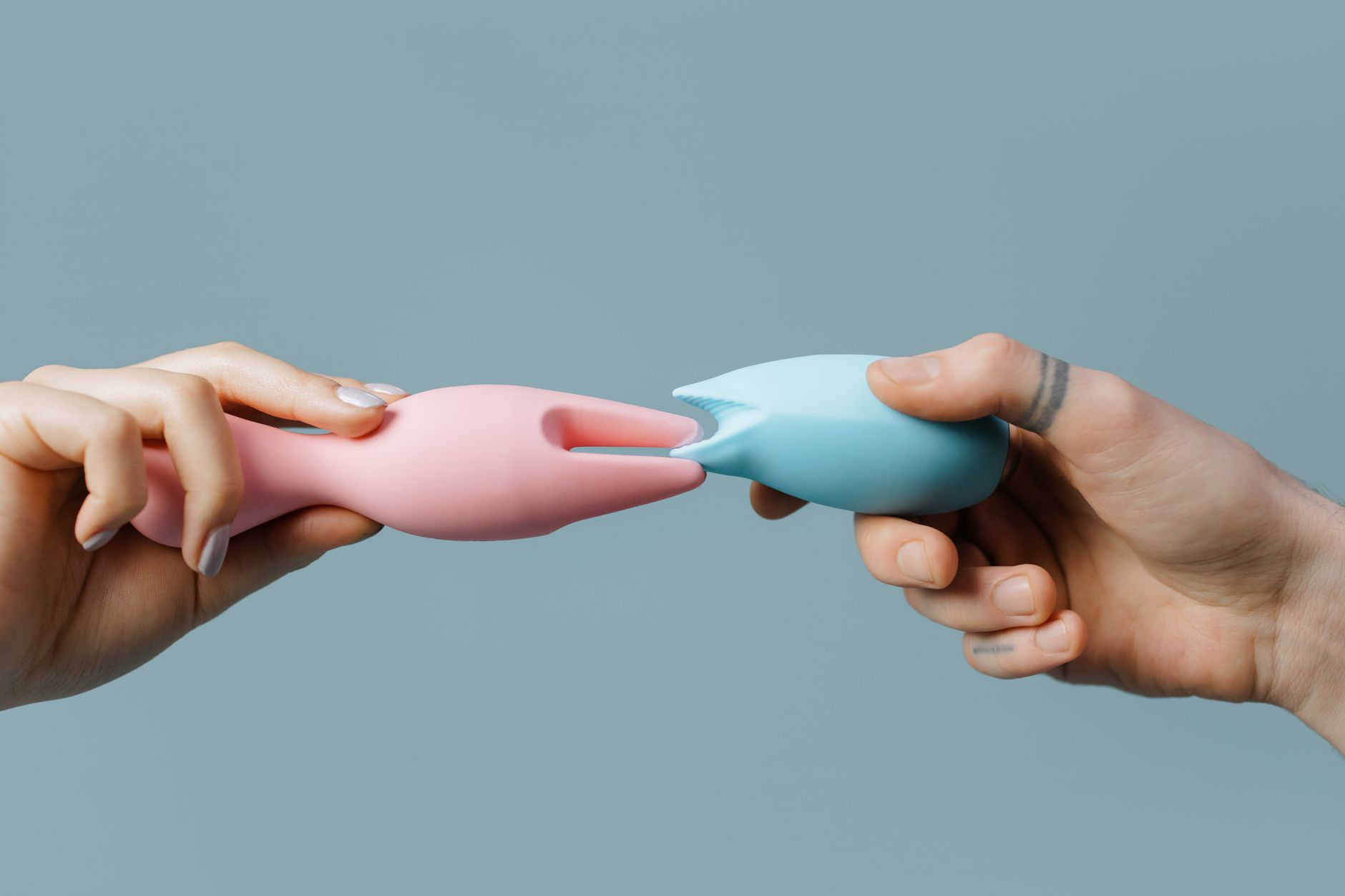
When your partner won't show up, you have to show up for yourself
Let's be real. When a partner avoids sex entirely, it's not just about missing physical touch. It's about feeling rejected, invisible, and stuck in a conversation that never actually happens because they won't engage with it. You're left carrying the entire weight of that silence, which is exhausting.
Here's what I see in my practice: women in this situation often stop touching themselves too. They've internalized their partner's avoidance as a reflection of their own desirability. Using a lemon vibrator or any clitoral vibrator becomes an act of resistance against that narrative. It's not a substitute for the relationship work you might need to do. It's proof that your pleasure exists independent of your partner's willingness to participate in it.
The psychology of avoidance and why solo play matters
When someone avoids sex completely, the reasons vary wildly. Performance anxiety, past trauma, depression, low testosterone, relationship resentment, or simply a mismatch in desire. What matters right now is not diagnosing them. What matters is protecting yourself from internalizing their avoidance as rejection of you.
Solo pleasure using a lemon clitoral vibrator does something specific in this context. It decouples your orgasm from your partner's participation or approval. You're literally building neurological pathways that don't require their presence. That changes how you feel about your body, and it changes how you show up in the relationship.
Many of my clients say that after three or four weeks of regular solo play with a lemon vibrator, they feel less resentful. Not because the relationship problem is solved, but because they've stopped making their pleasure their partner's responsibility. That shift is profound.
Getting started: permission and privacy
First barrier: you have to give yourself permission. If you've been waiting years for your partner to initiate, using a vibrator on your own might feel like cheating or a betrayal. It's not. Your pleasure is yours to tend to, regardless of your relationship status.
Second barrier: privacy. You need a locked door or at least 20 undisturbed minutes. If that's genuinely difficult in your living situation, a vibrator like the Lem (a compact lemon clitoral vibrator) is specifically designed for discretion. It's small, quiet, and rechargeable via USB.
Third barrier: realistic expectations. You might not orgasm the first time. You might feel weird or disconnected. That's normal when you're relearning your body after a long stretch of avoidance from a partner.
How to use a lemon clitoral vibrator when you're rebuilding arousal from scratch
Start low and slow, even if you're tempted to dive into intensity right away. A lemon vibrator typically has multiple patterns and intensities. Begin on pattern one at the lowest setting.
The first session: spend 15 minutes with no goal of orgasm. Lie down, get warm, start at the outer edges of your vulva. Let the suction sensation (if you're using a lemon sucker-style toy) or vibration register without judgment. Your brain needs time to rewire the "this is for me" signal.
The second and third sessions: extend to 20 minutes. You can try different patterns and pressures. Notice what feels good versus what feels obligatory. There's a difference.
By week two: most people find a pattern and intensity that builds genuine arousal. Stick with it. Your nervous system will start to anticipate and relax into the sensation.
The key difference between a lemon vibrator and other toys: the suction mechanism stimulates without direct friction, so it's less likely to cause overwhelm or numbness with prolonged use. That's why I recommend lemon vibrators specifically for people rebuilding arousal in complicated relationship contexts.
Managing the emotional terrain
This is where the real work happens. Using a vibrator solo while your partner avoids sex can bring up anger, sadness, or grief. That's not a sign you're doing it wrong. That's your nervous system processing what you've been suppressing.
You might find yourself crying during or after. That's fine. You might feel frustrated that this is your reality. Also fine. You might feel guilty about pleasure when your partner won't engage with it. That's the one I want to interrupt.
Guilt is usually a sign that you've internalized a false belief: that your pleasure requires their consent. It doesn't. Your body belongs to you.
If you're using a lemon clitoral vibrator and feelings come up, pause and sit with them for a minute. Don't push through to the orgasm just to make the feelings go away. Pleasure built on suppression doesn't last.
This is also about the conversation you need to have
Using a vibrator doesn't solve the relationship problem. It solves the problem of you waiting passively for someone else to give you permission to feel good. Those are different things.
At some point, you'll need to talk to your partner about what's actually happening. Why are they avoiding? Is it about you, or is it about them? Is the relationship worth the investment of therapy or coaching? Can they hear that their avoidance is creating distance?
That conversation is harder than using a lemon vibrator. But the vibrator gives you ground to stand on. You're not desperate. You're not resentful. You've reclaimed your own pleasure. From that place, you can actually negotiate with your partner about what comes next.
Some relationships survive this. Some don't. But you'll know it's not because you weren't desirable or because your pleasure wasn't worth pursuing.
Practical logistics: where and when
Many people in partner-avoidance situations feel like they have to hide their solo play. That's understandable but worth examining. You're not doing anything wrong.
If your partner is avoidant but not abusive, consider a brief, honest conversation: "I'm going to start using a vibrator for my own pleasure. This isn't about you. It's about me taking care of myself." Some partners will surprise you with curiosity or relief. Others will resist. Either way, you've been clear.
Optimal timing: when you have energy and a quiet mind. For many people, that's evening after any responsibilities are done. Early morning works too if you're a morning person.
Frequency: three to four times weekly is enough to rebuild the neural pathways and shift your relationship with your own pleasure. You don't need daily use, though some people enjoy it.
What changes when you start
Honestly, the first change is often an increase in irritability toward your partner. You're no longer carrying the entire weight of the sexual silence. You're also no longer available to absorb their shame or resistance. That can feel uncomfortable for them.
The second change is usually deeper: you stop negotiating with yourself about your desirability. A lemon vibrator doesn't care if you've had a hard day or if your body looks a certain way. It works when you use it. That consistency is healing.
Some people report that their interest in sex with their partner actually increases once they're regular solo users. The stakes feel lower. Pleasure exists for you independent of the relationship, so sex with a partner becomes an option, not a desperate need.
Others find that using a lemon clitoral vibrator clarifies that they want out of the relationship. The partner's avoidance feels less acceptable once you know what you're capable of.
Both outcomes are good. Both mean you're no longer trapped in someone else's sexual dysfunction.
FAQ: Partner avoidance and solo pleasure
Can using a lemon vibrator make my partner feel more threatened or less interested in me?
Possibly. Some partners feel emasculated or worried that a vibrator means they're not enough. That's their insecurity to work through, ideally in therapy. Your pleasure is not negotiable because someone else is uncomfortable with it. That said, communication helps. "I'm doing this for me, not as a statement about you" is clearer than secrecy. If they're so avoidant that they can't hear that distinction, that's information about the relationship.
How long before I notice a difference in how I feel about myself?
Most people report a shift within two to three weeks of consistent use. The shift is usually: less resentment, more agency, clearer thinking about the relationship. Physical pleasure builds faster, but emotional shifts take longer.
What if I genuinely can't relax enough to feel anything with a vibrator?
That's usually a sign that your nervous system is in protection mode due to relationship stress. A lemon vibrator can help, but you might also benefit from therapy or coaching to work through the trauma of sexual avoidance. These aren't separate issues.
Is it wrong to want my partner to use a vibrator with me or watch me?
No. That's a perfectly reasonable desire. Whether your partner can meet it depends on their capacity. An avoidant partner might panic at the suggestion. A partner willing to work on the relationship might see it as a bridge. You can ask. You can't force.
If I use a lemon clitoral vibrator regularly, will that change how sex with my partner feels?
Yes, usually in positive ways. Your body becomes more responsive and more aware of sensation. You know what you like. You're more relaxed. But if your partner is still avoidant, that increased readiness can actually highlight the gap in the relationship. Use that as information.
Should I tell my partner I'm using a vibrator, or keep it private?
That depends on your relationship safety and trust. If your partner is not abusive but just avoidant, honesty is usually better. It removes the energy cost of hiding. If there's abuse, you get to keep your pleasure private and protected. You know your situation best.
The permission slip you've been waiting for
You don't need your partner's approval to use a lemon vibrator. You don't need their permission to feel good. You don't need them to validate your pleasure.
What you might need is a lemon clitoral vibrator, 20 minutes of privacy, and the willingness to build a relationship with your own body that doesn't depend on someone else's willingness to show up. Once you have that, everything else gets clearer. The relationship work, the conversations, the decisions about whether this partnership is actually sustainable. All of it becomes visible when you're not suffocating under the weight of someone else's sexual dysfunction.
Start there. Start with yourself. The rest will follow.
If you're struggling with how to approach the relationship conversation or need clarity on what comes next, reach out to talk through your specific situation. Sometimes a trained perspective helps.