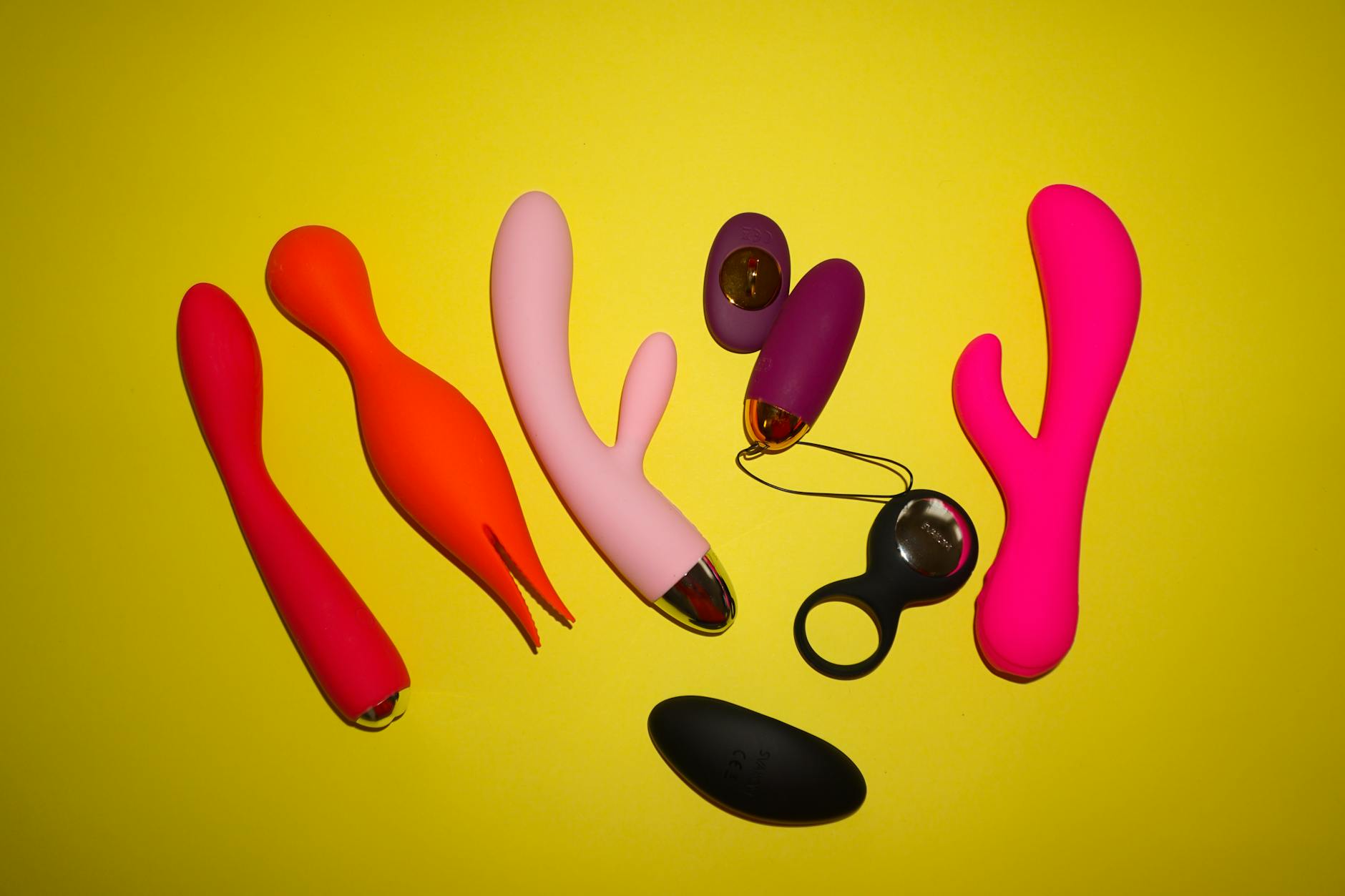
Let's be real about the new relationship jitters
You're seeing someone new. Things are clicking. And somewhere in the back of your mind, you're thinking about bringing a lemon vibrator into the mix. The anxiety is real. Will they think you're not satisfied? Will it feel clinical? What if it kills the mood?
Here's the truth: introducing a lemon clitoral vibrator to a new partner is actually one of the clearest ways to signal that you know what you want and you're inviting them to help you get there. That's not pressure. That's trust.
Why a new partner changes everything
When you've been with someone for years, there's a kind of accumulated knowledge between you. They know your body's rhythm. You know theirs. A new partner doesn't have that map yet. What they do have is permission to learn it faster and better than you might teach them alone.
Introducing a lemon vibrator early isn't a shortcut around building intimacy. It's actually an accelerant for it. Studies on couples who communicate openly about sexual preferences report higher satisfaction and lower anxiety. You're not taking anything away from the experience. You're adding a language that makes the experience clearer for both of you.
The conversation before the bedroom
Don't spring this on someone mid-sex. That's the number one mistake I see, and it creates exactly the awkwardness you're trying to avoid.
Instead, bring it up the same way you'd mention any preference. "I have something I want to try with you. It's a lemon vibrator." That's it. You can add context if you want: "I love clitoral stimulation, and I want to show you exactly what feels good for me." Or simpler: "This helps me relax and feel better sensation."
Pay attention to their response. If they seem curious, that's your green light to talk logistics. If they seem hesitant, dig into why. Sometimes it's genuine concern. Sometimes it's just the unknown. A few minutes of "This is what I like, and I'd love to share it with you" can shift everything.
How to actually introduce it in the moment
Timing matters more than you'd think. Don't pull it out when things are just starting to heat up. Use it once you're already aroused. This gives your body context, and it signals to your partner that this is part of a natural progression, not a replacement for what you were already doing.
Start with lower settings. Most lemon vibrators have 3-10 intensity levels. Begin at pattern 1 or 2. This is partly practical (your body adjusts to sensation gradually) and partly psychological. It lets your partner see that you're in control, not overwhelmed. Control is confidence, and confidence is magnetic.
Guide their hands. This is crucial. If you're the one with the vibrator, show them where you want pressure, how much speed feels good, when you want them to slow down. If they're holding it, do the same thing. "A little higher" or "Slower, please" isn't criticism. It's intimacy. You're literally teaching them your body in real time.
The sensation part they rarely talk about
Here's something interesting: when you introduce a lemon clitoral vibrator to a new partner, it often paradoxically increases sensation from their touch alone. Why? Because your nervous system is already primed. Your clitoral tissue is engorged. The surrounding area is hypersensitive. When they touch you after using the vibrator, it feels different. Better. Sharper.
This is actually valuable information for you both. It shows your partner what your body is capable of feeling, which can make them more intentional about pressure, speed, and rhythm even without the vibrator later.
Managing the pressure and expectation
A lot of people worry that introducing a vibrator early will set an expectation that you'll always use it. You won't. And you should say that explicitly.
"I love using this with you sometimes. And I also love when we don't." That's all. You're removing the invisible contract that they might be building in their head.
Some partners will worry that the vibrator is better than they are. It's not. It's different. A lemon vibrator can't kiss you, can't make you laugh, can't build anticipation the way presence and attention do. What it does is bypass the friction and numbness that sometimes happens in newer relationships where both people are still figuring out what the other person likes.
When to go slower, and when to move forward
If your partner is uncomfortable, don't push. But also don't abandon the idea. People often need time to process. Give it a week. Bring it up again casually. "I've been thinking about that thing we talked about." Sometimes the second mention lands differently than the first.
If they're enthusiastic, you can escalate naturally. Maybe next time they hold it. Maybe you use it while they're inside you, if penetration is part of your routine. Maybe they use it on you while you're together in a different position. These are small variations that deepen both novelty and trust.
If they remain resistant, you need to ask yourself whether this is about the vibrator or about something deeper. Sometimes resistance to sex toys is about control, or about feeling inadequate, or about a fundamental mismatch in sexual openness. Those are relationship conversations, not bedroom conversations.
The practical stuff nobody mentions
Lube helps. Even if you produce natural lubrication, a bit of water-based lube makes the vibrator glide more smoothly and feel less intense if the sensation is overwhelming at first.
Battery or charge level matters. Nothing kills mood like discovering your lemon vibrator is dead. Charge it before you think you'll need it.
Clean it between uses. This matters for hygiene and also for logistics. A clean toy feels different in your hand and looks less clinical when you're introducing it.
Keep it accessible but not visible. You want to be able to reach it without fumbling around for five minutes in a drawer. But you also don't want it sitting on the nightstand like a piece of furniture. A bedside box or a small bag works.
What changes in the medium term
Once you've introduced a lemon clitoral vibrator to a new partner, something subtle shifts. You've established that pleasure is something you talk about. That it's collaborative. That trying new things is normal.
This tends to make people more open with other preferences too. They might mention something they want to try. You might discover new things about each other's bodies together. The vibrator becomes less of a novelty and more of a tool, like communication itself.
Many couples find that using a vibrator together early in a relationship actually accelerates the kind of comfort and openness that usually takes months to build. You're solving the "what do you actually like" problem in weeks instead of years.
The conversation about sensation rebuilding
If you're coming into a new relationship after a period of numbness, disconnection, or low sensation (whether from stress, medication, or just years of routine with someone else), a lemon vibrator can help you re-establish what pleasure actually feels like. Your new partner will benefit from that clarity too.
You might say something like: "I want to rebuild strong sensation in this relationship. Using this helps me get there faster, and it helps me show you what I need." That's honest. It's not a diagnosis. It's an invitation.
FAQ: The questions that come up
Will my new partner think I'm not satisfied with them?
No, unless you communicate it that way. A vibrator isn't a replacement for a partner. It's a tool for sensation. People use mirrors when they want to see their faces better. They use forks when they want to eat certain foods. It doesn't mean their hands are inadequate. Same logic.
How soon is too soon to bring one out?
There's no magic timeline. Some couples introduce toys on the first sexual encounter. Others wait months. The key is comfort and communication. If you feel like you can have a basic conversation about what you want, you can bring it up. That's usually by the third or fourth intimate encounter, but every relationship is different.
What if they say no?
That's their boundary, and you respect it. But also understand that "no" sometimes means "not now." Circle back in a week or two. If they say no again, you need to decide whether this is a dealbreaker for you. It's fair to want a partner who's willing to explore with you. It's also fair for them to have limits. The question is whether your limits and theirs are compatible.
Do I have to use it every time we have sex?
Absolutely not. Mix it up. Sometimes use the vibrator, sometimes don't. Sometimes use it alone before or after. Sometimes use it together. Variety keeps sensation fresh and prevents both of you from becoming dependent on intensity.
Can we use a lemon vibrator during different types of sex?
Yes. During penetration, during oral sex, during solo play with your partner watching, during foreplay. There's no single right way. The best approach is trial and error. Start simple and vary from there.
What if the vibrator feels too intense?
Start at the lowest setting. Build up over time. Use more lube. Take breaks. And remember: the goal isn't maximum intensity. It's sensation that feels good for you. If the lowest setting still feels too much, you might prefer something gentler, or you might need more time for your body to adjust.
The long view
Introducing a lemon vibrator to a new partner isn't about the toy. It's about establishing that you're someone who knows what you want and who can communicate about it clearly. That's attractive. That's the foundation of good sex with anyone.
The actual clitoral stimulation is the easy part. The real work is the conversation. Get that right, and everything else follows.